Home Blog Page 21

Orpheus and Eurydice 1

0

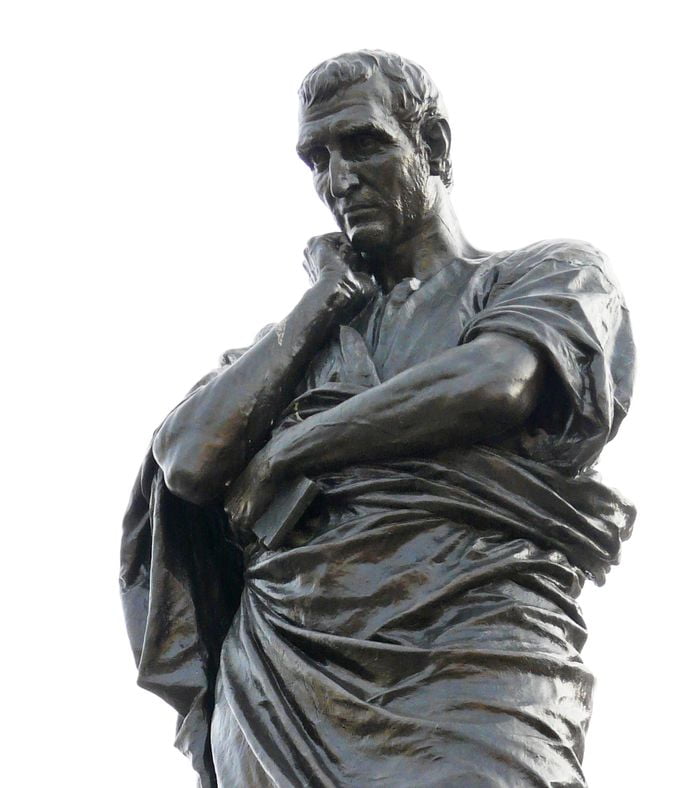
Ovid (43 B.C.—18 A.D.?)

Publius Ovidius Naso, better known to readers of English as Ovid, was born not far from Rome, and spent the latter part of his life in exile. The Metamorphoses, his most ambitious work, is an attempt to reshape in metrical form the chief stories of Greek mythology, and several from Roman mythology. Orpheus and Eurydice, one of the most human of the legends of antiquity, is a graceful piece of writing. Its “point” is as clear and as cleverly turned as you will find in any ancient tale.

The present translation is based by the editors upon two early versions, the one very literal, the other a paraphrase. The story, which has no title in the original, appears in the Tenth Book of the Metamorphoses.

Orpheus and Eurydice

Thence Hymenaeus, clad in a saffron-colored robe, passed through the unmeasured spaces of the air and directed his course to the region of the Ciconians, and in vain was invoked by the voice of Orpheus. He presented himself, but brought with him neither auspicious words, nor a joyful appearance, nor happy omen. The torch he held hissed with a smoke that brought tears to the eyes, though it was without a flame. The issue was more disastrous than the omen; for the new bride, while strolling over the grass attended by a train of Naiads, was killed by the sting of a serpent on her ankle.

After the Rhodopeian bard had bewailed her in the upper realms, he dared, that he might try the shades below as well, to descend to the Styx by the Taenarian Gate, and amid the phantom inhabitants, he went to Persephone and him who held sway over the dark world. Touching the strings of his harp and speaking, he thus addressed them:

“Oh, ye deities of the world that lies beneath the earth, to which we all come at last, if I be permitted to speak, laying aside the artful expressions of a deceitful tongue, I have not descended hither from curiosity to see dark Tartarus nor to bind the threefold throat of the Medusaean monster bristling with serpents. My wife is the cause of my coming, into whom a serpent which she trod on suffused its poison, and cut short the thread of her years. I wished to be able to endure this, and I will not deny that I have striven to do so.

But love has proved stronger. That god is well-known in the regions above; whether he be so here as well, I am uncertain. Yet I think that even here he is, and if the story of the rape of former days is true, `twas love that brought you two together. By these places filled with terrors, by this vast chaos and by the silence of these boundless realms, I entreat you, weave over again the quickspun thread of the life of Eurydice.

“To you we all belong, and having stayed but a little while above, sooner or later we all hasten to your abode. Hither are we all hastening. This is our last home, and you possess indisputable dominion over the human race. She, too, when in due time she shall have completed her allotted number of years, will be under your sway. The enjoyment of her I entreat as a favor, but if the fates deny me this privilege on behalf of my wife, I have determined that I will never return to earth. Triumph, then, in the death of us both!”

The story above has been copied from ensaristanbul.com. You can read the rest of the story on link Orpheus and Eurydice.

Read More about Memoirs or Chronicle of the Fourth Crusade part 49
The Robbers of Egypt 1

0

Heliodorus (3rd Century, A.D.)

Heliodorus was one of the earliest writers of the novel, or romance. Though he lived long after the close of the Golden Age of Greek lit-erature, he is (together with Longus) the initiator of the novel form. But like many novelists (even modern novelists, who are supposed to know better), he interspersed his romance with episodes which are in themselves short stories. The very first chapter of the Ethiopian Romance, which is here reprinted, is such a story.

The present version is slightly modified and modernized from the early English translation by Thomas Underdowne. There is no title to the story in the original.

The Robbers of Egypt

The text below has been copied from privatetours.info; For the rest of the story you can visit link The Robbers of Egypt.

At the first smile of day, when the sun was just beginning to shine on the summits of the hills, men whose custom was to live by rapine and violence ran to the top of a cliff and stretched toward that mouth of the Nile which is called Heracleot. Standing awhile, they viewed the sea underneath them, and when they had looked a good season afar off into the same and could see nothing which could put them in the hope of prey, they cast their eyes toward the neighboring shore, where a ship lay moored, without sailors but full-freighted; which thing they who were afar off might easily conjecture, for the cargo brought the water up to the ship`s third loading-line. But on the shore every place was full of men newly slain, some quite dead, some half dead, some whose bodies yet panted and plainly declared that there had been a battle fought of late.

There could be seen no signs or tokens of any just quarrel, but only some poor confused remnants of an unlucky banquet which had ended so. For the tables were furnished with delicate dishes, some whereof lay in the hands of those that were slain, having served as weapons in the battle so suddenly begun. Other tables covered such as had crept under them to hide themselves, as they thought. Besides, the cups were overthrown and fallen from the hands, either of them that drank or those who had, instead of stones, used them. For that sudden mischief wrought new devices, and taught them instead of weapons to use their pots. Of those who lay there, one was wounded with an ax, another was hurt with the shells of fishes, whereof on the shore there was great plenty; another was battered with a club, many burnt by fire, and the rest by divers other means, but most of all were slain with arrows.

To be brief, God showed a wonderful sight in so small a space, imbruing wine with blood, joining battle with banqueting, mingling indifferently slaughter with drinking, and killing with quaffings, providing such a sight for the thieves of Egypt to gaze at. For they, when they had looked upon these things a good while from the hill, could not understand what that sight meant, forasmuch as they saw some slain there, but the conquerors could they see nowhere. A manifest victory, but no spoils taken away, a ship without mariners, but, as concerning other things, untouched, as if she had been kept with a guard of many men, and lay at road in a peaceful harbor.

But though they knew not what the thing meant, they still had regard for gain, and deeming themselves to be victors, hurried with all speed to seize their booty. They were but a little way from the ship when they saw a sight more perplexing than the rest a great deal.

Present mischancelent beauty, who almost might be supposed a goddess, sat upon a rock seeming not a little to be grieved with that present mischance, but for all that of excellent courage. She had a garland of laurel on her head, a quiver on her back; to her left shoulder a bow was fastened, and her left arm hung carelessly down. Her right elbow she rested upon her thigh, holding her cheek in her hand, looking downward without moving her head, beholding a certain young man who lay before her, the which was sore wounded and seemed to lift up himself as if he had been awakened out of a dead sleep, almost of death itself.

Yet was he in this case of singular beauty, and although his cheeks were besprinkled with blood, his whiteness did appear so much the more. He was constrained for grief to close his eyes, but the sight of the maiden drew them towards her, and they must needs see, because they saw her. As soon as he came to himself he heaved a deep sigh and uttered these words very faintly, “And art thou safe indeed, my sweetheart?” quota he. “Or hast thoub by thy death augmented the slaughter? Canst thou not endure, even after death, to be separated from me, that now a vision of thy spirit haunts this place of trouble?” “Nay,” answered the maid, “on you doth all my estate depend, for good or ill, for this cause, you see”—showing a knife in her hand— “this has hitherto been waiting, and only by the chance of your recovery was restrained.”

As soon as she had said thus, she leaped from the stone, and they who were on the hill, as well for wonder as also for the fear they had, as if they had been stricken with lightning, ran every man to hide them in the bushes there beside. For she seemed to them a thing of greater price, and more heavenly when she stood upright, and her arrows with the sudden moving of her body gave a clash on her shoulders, her apparel wrought with gold glistened against the sun, and her hair under the garland, blown about with the wind, covered a great part of her back. The thieves were greatly afraid; and even more than what they saw did their ignorance of what had happened before terrify them. Some of them said indeed it was a goddess—Artemis, or Isis, the lady of the land—others declared it was a priestess of the gods who, replenished with divine fury, had made the great slaughter which there appeared. And they every man gave his verdict, because they knew not yet the truth.

Read More about The Miracle of the Jew part 1

Phineus And The Harpies 1

0

Apollonius of Rhodes (3rd Century B.c.)

Although he was a late writer in the epic form, Apollonius treated ancient mythical material, but from the standpoint of a scholar and a literary stylist. He left his native land, Rhodes, and settled m Alexandria, then the centre of the cultured world. The tale of Phineus is not new, but the details which embellish it, and the verbal pyrotechnics which he lavished upon it, are highly characteristic of the decadent period in which it was written.

The present translation is that of R. C. Seaton, in the Loeb edition, William Heinemann, London, 1912. There is no title to the story in the original.

Phineus And The Harpies

There Phineus, son of Agenor, had his home by the sea, Phineus, who above all men endured most bitter woes because of the gift of prophecy which Leto`s son had granted him aforetime. And he reverenced not a whit even Zeus himself, for he foretold unerringly to men his sacred will. Wherefore Zeus sent upon him a lingering old age, and took from his eyes the pleasant light, and suffered him not to have joy of the dainties untold that the dwellers-around ever brought to his house when they came to inquire the will of heaven. But on a sudden, swooping through the clouds, the Harpies, with their crooked beaks, incessantly snatched the food away from his mouth and hands, and at times not a morsel of food was left, at others but a little, in order that he might live and be tormented. And they poured forth over all a loathsome stench; and no one dared not merely to carry food to his mouth, but even to stand at a distance, so foully reeked the remnants of the meal.

But straightway when he heard the voice and the tramp of the band he knew that they were the men passing by, at whose coming Zeus`s oracle had declared to him that he should have joy of his food. And he rose from his couch, like a lifeless dream, bowed over his staff, and crept to the door on his withered feet, feeling the walls; and as he moved, his limbs trembled for weakness and age; and his parched skin was caked with dirt, and naught but the skin held his bones together. And he came forth from the hall and sat on the threshold of the courtyard; and a dark stupor covered him, and it seemed that the earth reeled round beneath his feet, and he lay in a strength less trance, speechless. But when they saw him they gathered round and marveled, and he at last drew labored breath from the depths of his chest and spoke among them with prophetic utterance:

Son of Leto

“Listen, bravest of all the Hellenes, if it be truly ye, whom by a king`s ruthless command Jason is leading on the ship Argo in quest of the fleece. It is ye truly. Even yet my soul by its divinations knows everything. Thanks I render to thee, King, son of Leto, plunged in bitter affliction though I be. I beseech you by Zeus, the god of suppliants, the sternest foe to sinful men, and for the sake of Phoebus and Hera herself under whose especial care ye have come hither, help me, save an ill-fated man from misery, and depart not uncaring, and leaving me thus as ye see. For not only has the Fury set her foot on my eyes and I drag on to the end a weary old age, but besides my other woes a woe hangs over me, the bitterest of all.

The Harpies, swooping down from some unseen den of destruction, ever snatch the food from my mouth, and I have no device to aid me. But it were easier, when I long for a meal, to escape my own thoughts than them, so swiftly do they fly through the air. But if haply they do leave me a morsel of food, it reeks of decay and the stench is unendurable, nor could any mortal bear to draw near, even for a moment, no, not if his heart were wrought of adamant. But necessity, bitter and insatiate, compels me to abide, and abiding to put food into my accursed belly. These pests, the oracle declares, the sons of Boreas shall restrain, and no strangers are they that shall ward them off” if indeed I am Phineus who was once renowned among men for wealth and the gift of prophecy, and if I am the son of my father Agenor; and when I ruled among the Thracians, by my bridal gifts I brought home their sister Cleopatra to be my wife.”

So spake Agenor`s son, and deep sorrow seized each of the heroes, and especially the two sons of Boreas. And brushing away a tear, they drew nigh, and Zetes spake as follows, taking in his own the hand of the grief-worn sire:

“Unhappy one, none other of men is more wretched than thou, me- thinks. Why upon thee is laid the burden of so many sorrows? Hast thou with baneful folly sinned against the gods through thy skill in prophecy? For this are they greatly wroth with thee? Yet our spirit is dismayed within us for all our desire to aid thee, if indeed the god has granted this privilege to us two. For plain to discern to men of earth are the reproofs of the immortals. And we will never check the Harpies when they come, for all our desire, until thou hast sworn that for this we shall not lose the favor of heaven.”

For the rest of the story you can visit link Phineus and the Harpies.

Read More about Memoirs or Chronicle of the Fourth Crusade part 121

Zheravna Festival

0

Private tours Bulgaria. Bulgaria is no different from any other country in the world. It has its own history, heroes, legends. It surely had its falls and pinnacle. Bulgaria is inviting you on private tours Bulgaria to learn more about the country.

The country had difficult moments but it has always had its folklore. That folklore full of never ending energy which helped Bulgarians to survive through the centuries of wars. It also helped them to stay as a nation. What does folklore mean? It is the beliefs, traditions, stories of a community which are passed through the generations by word of mouth. Bulgarian folk songs, Bulgarian traditional costumes have these in them. The costume is one of the most typical elements of the Bulgarian folk culture.

It reflects the specificity, traditional culture and life of the Bulgarian people. According to ethnography, the origin of the costume is mainly Slavonic. However, it bears features of the clothes that Thracians and ancient Bulgarians used to wear. Also, features of other peoples’ can be noticed in the national costume. These are the nations that Bulgarians were in contact with – Turkish people, Greeks, Albanians, Vlachs. (private tour Istanbul)

A magic world of colours and patterns

The magic of private tours Bulgaria is endless. It reveals a magic world of different colours and motifs. These colours and motifs tell us stories of times long gone. Although Bulgaria is a Christian country, still paganism is alive. Pagan beliefs and legends are significant elements in the traditional costume.

In the past people used to have their traditional everyday clothing and such on festive occasions. Each region of Bulgaria has its own costume, which has typical motifs that make it unique. Diversity comes as a result of different factors: geographical, historical, socio-economic, cultural, religious, outside influence and of course, the personal taste.

Firstly, we need to say that costumes are male and female. Due to the many colours and motifs, the female clothing is more interesting than the men’s. However, male clothing can be attractive as well. Usually women’s clothes were the soukman, the one-apron, the two-apron costumes and the saya. Of course, they differed in the items included in the clothing. More or less, the main item in all of them was the chemise.

And secondly, what distinguishes both costumes is the outer clothes. For men`s costumes the shape and colour are the ones that matter, while for female it is the cut and wearing style.

This article is copied from www.enmarbg.com. For more information, you can click on private tours Bulgaria.

Read More about Memoirs or Chronicle of the Fourth Crusade part 115

The Signal part 8

0

In two minutes` time No. 7 train was due. “Oh, Lord! Have pity on innocent souls!” In his mind Semyon saw the engine strike against the loosened rail with its left wheel, shiver, careen, tear up and splinter the sleepers and just there, there was a curve and the embankment seventy feet high, down which the engine would topple and the third-class carriages would be packed… little children… All sitting in the train now, never dreaming of danger. “Oh, Lord! Tell me what to do! … No, it is impossible to run to the hut and get back in time.”

Semyon did not run on to the hut, but turned back and ran faster than before. He was running almost mechanically, blindly; he did not know himself what was to happen. He ran as far as the rail which had been pulled up; his sticks were lying in a heap. He bent down, seized one without knowing why, and ran on farther. It seemed to him the train was already coming.

Strength was exhausted

He heard the distant whistle; he heard the quiet, even tremor of the rails; but his strength was exhausted, he could run no farther, and came to a halt about six hundred feet from the awful spot. Then an idea came into his head, literally like a ray of light. Pulling off his cap, he took out of it a cotton scarf, drew his knife out of the upper part of his boot, and crossed himself, muttering, “God bless me. I tore up a rail!”

Read More about Tours Bulgaria around Monasteries

The Signal part 7

0

He got two kopeks apiece for them. On the day following the visit of the commission he left his wife at home to meet the six o`clock train, and Started off to the forest to cut some sticks. He went to the end of his section at this point the line made a sharp turn descended the embankment, and struck into the wood at the foot of the mountain. About half a verst away there was a big marsh, around which splendid reeds for his flute grew.

He cut a whole bundle of stalks and started back home. The sun was already dropping low, and in the dead stillness only the twittering of the birds was audible, and the crackle of the dead wood under his feet. As he walked along rapidly, he fancied he heard the clang of iron striking iron, and he redoubled his pace. There was no repair going on in his section.

Quietly to crawl

What did it mean? He emerged from the woods, the railway embankment stood high before him; on the top a man was squatting on the bed of the line busily engaged in something. Semyon commenced quietly to crawl up towards him. He thought it was some one after the nuts which secure the rails. He watched, and the man got up, holding a crow-bar in his hand. He had loosened a rail, so that it would move to one side. A mist swam before Semyon`s eyes; he wanted to cry out, but could not. It was Vasily! Semyon scrambled up the bank, as Vasily with crow-bar and wrench slid headlong down the other side.

“Vasily Stepanych! My dear friend, come back! Give me the crowbar. We will put the rail back; no one will know. Come back! Save your soul from sin!”
Vasily did not look back, but disappeared into the woods.

Semyon stood, before the rail which had been tom up. He threw down his bundle of sticks. A train was due; not a freight, but a passenger- train. And he had nothing with which to stop it, no flag. He could not replace the rail and could not drive in the spikes with his bare hands. It was necessary to run, absolutely necessary to run to the hut for some tools. “God help me!” he murmured.

Semyon started running towards his hut. He was out of breath, but still ran, falling every now and then. He had cleared the forest; he was only a few hundred feet from his hut, not more, when he heard the distant hooter of the factory sound six o`clock!

Read More about Memoirs or Chronicle of the Fourth Crusade part 2

The Signal part 6

0

“Head office? Ah, you are going to complain, I suppose. Give it up! Vasily Stepanych, forget it.”

“No, mate, I will not forget. It is too late. See! He struck me in the face, drew blood. So long as I live I will not forget. I will not leave it like this!”

Semyon took his hand. “Give it up, Stepanych. I am giving you good advice. You will not better things”

“Better things! I know myself I shan`t better things. You were right about Fate. It would be better for me not to do it, but one must stand up for the right.”

“But tell me, how did it happen?”

Government inquiry

“How? He examined everything, got down from the trolley, looked into the hut. I knew beforehand that he would be strict, and so I had put everything into proper order. He was just going when I made my complaint. He immediately cried out: `Here is a Government inquiry coming, and you make a complaint about a vegetable garden. Here are privy councilors coming, and you annoy me with cabbages!` I lost patience and said something not very much, but it offended him, and he struck me in the face. I stood still; I did nothing, just as if what he did was perfectly all right. They went off; I came to myself, washed my face, and left.”
“And what about the hut?”

“My wife is staying there. She will look after things. Never mind about their roads.”

Vasily got up and collected himself. “Good-bye, Ivanov. I do not know whether I shall get any one at the office to listen to me.”

“Surely you are not going to walk?”

“At the station I will try to get on a freight train, and to-morrow I shall be in Moscow.”

The neighbors bade each other farewell. Vasily was absent for some time. His wife worked for him night and day. She never slept, and wore herself out waiting for her husband. On the third day the commission arrived. An engine, luggage-van, and two first-class saloons; but Vasily was still away. Semyon saw his wife on the fourth day. Her face was swollen from crying and her eyes were red.

“Has your husband returned?” he asked. But the woman only made a gesture with her hands, and without saying a word went her way.

Semyon had learned when still a lad to make flutes out of a kind of reed. He used to bum out the heart of the stalk, make holes where necessary, drill them, fix a mouth-piece at one end, and tune them so well that it was possible to play almost any air on them. He made a number of them in his spare time, and sent them by his friends amongst the freight brakemen to the bazaar in the town.

Read More about Memoirs or Chronicle of the Fourth Crusade part 20

The Signal part 5

0

Vasily kept silent for a while, pulling at his pipe, then added quietly: “A little more and I should have done for him.”

“You are hot-tempered.”

“No, I am not hot-tempered, but I tell the truth and think. Yes, he will still get a bloody nose from me. I will complain to the Chief. We will see then!” And Vasily did complain to the Chief.

Once the Chief came to inspect the line. Three days later important personages were coming from St. Petersburg and would pass over the line. They were conducting an inquiry, so that previous to their journey it was necessary to put everything in order. Ballast was laid down, the bed was leveled, the sleepers carefully examined, spikes driven in a bit, nuts screwed up, posts painted, and orders given for yellow sand to be sprinkled at the level crossings. The woman at the neighboring hut turned her old man out to weed.

Cleaned and polished

Semyon worked for a whole week. He put everything in order, mended his kaftan, cleaned and polished his brass plate until it fairly shone. Vasily also worked hard. The Chief arrived on a trolley, four men working the handles and the levers, making the six wheels hum. The trolley traveled at twenty versts an hour, but the wheels squeaked. It reached Semyon`s hut, and he ran out and reported in soldierly fashion. All appeared to be in repair.

“Have you been here long?” inquired the Chief.

“Since the second of May, your Excellency.”

“All right. Thank you. And who is at hut No. 164?”

The traffic inspector (he was traveling with the Chief on the trolley) replied: “Vasily Spiridov.”

“Spiridov, Spiridov Ah! is he the man against whom you made a note last year?”

“He is.”

“Well, we will see Vasily Spirodov. Go on!” The workmen laid to the handles, and the trolley got under way. Semyon watched it, and thought, “There will be trouble between them and my neighbor.”

About two hours later he started on his round. He saw some one coming along the line from the cutting. Something white showed on his head. Semyon began to look more attentively. It was Vasily. He had a stick in his hand, a small bundle on his shoulder, and his cheek was bound up in a handkerchief.
“Where are you off to?” cried Semyon.

Vasily came quite close. He was very pale, white as chalk, and his eyes had a wild look. Almost choking, he muttered: “To town to Moscow to the head office.”

Read More about Memoirs or Chronicle of the Fourth Crusade part 103

The Signal part 4

0

Semyon also got up. “Neighbor,” he called, “why do you lose your temper?” But his neighbor did not look round, and kept on his way.

Semyon gazed after him until he was lost to sight in the cutting at the turn. He went home and said to his wife: “Arina, our neighbor is a wicked person, not a man.”

However, they did not quarrel. They met again and discussed the same topics.

“Ah, friend, if it were not for men we should not be poking in these huts,” said Vasily, on one occasion.

“And what if we are poking in these huts? It`s not so bad. You can live in them.”

“Live in them, indeed! Bah, you!… You have lived long and learned little, looked at much and seen little. What sort of life is there for a poor man in a hut here or there? The cannibals are devouring you. They are sucking up all your life-blood, and when you become old, they will throw you out just as they do husks to feed the pigs on. What pay do you get?”
“Not much, Vasily Stepanych twelve rubles.”

Firing and lighting

“And I, thirteen and a half rubles. Why? By the regulations the company should give us fifteen rubles a month with firing and lighting. Who decides that you should have twelve rubles, or I thirteen and a half? Ask yourself! And you say a man can live on that? You understand it is not a question of one and a half rubles or three rubles even If they paid us each the whole fifteen rubles. I was at the station last month. The director passed through. I saw him. I had that honor. He had a separate coach. He came out and stood on the platform I shall not stay here long; I shall go somewhere, anywhere, follow my nose.”

“But where will you go, Stepanych? Leave well enough alone. Here you have a house, warmth, alittle piece of land. Your wife is a worker.”
“Land! You should look at my piece of land. Not a twig on it nothing. I planted some cabbages in the spring, just when the inspector nime along. He said: `What is this? Why have you not reported this? Why have you done this without permission? Dig them up, roots and nil.` He was drunk. Another time he would not have said a word, but this time it struck him. Three rubles fine!…”

Read More about Memoirs or Chronicle of the Fourth Crusade part 82

The Signal part 3

0

Two months passed, and Semyon commenced to make the acquaintance of his neighbors, the track-walkers on either side of him. One was a very old man, whom the authorities were always meaning to relieve. He scarcely moved out of his hut. His wife used to do all his work. The other track-walker, nearer the station, was a young man, thin, but muscular. He and Semyon met for the first time on the line midway between the huts. Semyon took off his hat and bowed. “Good health to you, neighbor,” he said.

The neighbor glanced askance at him. “How do you do?” he replied ; then turned around and made off.

Later the wives met. Semyon`s wife passed the time of day with her neighbor, but neither did she say much.

On one occasion Semyon said to her: “Young woman, your husband is not very talkative.”

The woman said nothing at first, then replied: “But what is there for him to talk about? Every one has his own business. Go your way, and God be with you.”

However, after another month or so they became acquainted. Semyon would go with Vasily along the line, sit on the edge of a pipe, smoke, and talk of life. Vasily, for the most part, kept silent, but Semyon talked of his village and of the campaign through which he had passed.

Sorrow in my day

“I have had no little sorrow in my day,” he would say; “and goodness knows I have not lived long. God has not given me happiness, but what He may give, so will it be. That`s so, friend Vasily Stepanych.”

Vasily Stepanych knocked the ashes out of his pipe against a rail, stood up, and said: “It is not luck which follows us in life, but human beings. There is no crueller beast on this earth than man. Wolf does not eat wolf, but man will readily devour man.”

“Come, friend, don`t say that; a wolf eats wolf.”

“The words came into my mind and I said it. All the same, there is nothing crueller than man. If it were not for his wickedness and greed, it would be possible to live. Everybody tries to sting you to the quick, to bite and eat you up.”

Semyon pondered a bit. “I don`t know, brother,” he said; “perhaps it is as you say, and perhaps it is God`s will.”

“And perhaps,” said Vasily, “it is waste of time for me to talk to you. To put everything unpleasant on God, and sit and suffer, means, brother, being not a man but an animal. That`s what I have to say.” And he turned and went off without saying good-bye.

Read More about Memoirs or Chronicle of the Fourth Crusade part 35