Home Blog Page 20

Lludd and Llevelys part 4

0

Andthen, in thine own person do thou remain there watching, and thou wilt see thedragon fighting in the form of terrific animals. And at length they will takethe form of dragons in the air. And last of all, after wearying themselves withfierce and furious fighting, they will fall in the form of two pigs upon thecovering, and they will sink in, and the covering with them, and they will drawit down to the very bottom of the cauldron. And they will drink up the whole ofthe mead; and after that they will sleep. Thereupon do thou immediately foldthe covering around them, and bury them in a kist- vaen, in the strongest placethou hast in thy dominions, and hide them in the earth. And as long as they shallbide in that strong place no plague shall come to the Island of Britain fromelsewhere.“Thecause of the third plague,” said he, “is a mighty man of magic, who takes thymeat and thy drink and thy store. And he through illusions and charms causesevery one to sleep. Therefore it is needful for thee in thy own person to watchthy food and thy provisions. And lest he should overcome thee with sleep, bethere a cauldron of cold water by thy side, and when thou art oppressed withsleep, plunge into the cauldron.”

Race and Coranians

ThenLludd returned back unto his land. And immediately he summoned to him the wholeof his own race and of the Coranians. And as Llevelys had taught him, hebruised the insects in water, the which he cast over them all together, andforthwith it destroyed the whole tribe of the Coranians, without hurt to any ofthe Britons.Andsome time after this, Lludd caused the Island to be measured in its length andin its breadth. And in Oxford he found the central point, and in that place hecaused the earth to be dug, and in that pit a cauldron to be set, full of thebest mead that could be made, and a covering of satin over the face of it. Andhe himself watched that night. And while he was there, he beheld the dragonsfighting.Andwhen they were weary they fell, and came down upon the top of the satin, anddrew it with them to the bottom of the cauldron. And when they had drunk themead they slept. And in their sleep, Lludd folded the covering around them, andin the securest place he had in Snowdon, he hid them in a kistvaen. Now afterthat this spot was called Dinas Emreis, but before that, Dinas Ffaraon. Andthus the fierce outcry ceased in his dominions.

Read More about Lludd and Llevelys part 2

Lludd and Llevelys part 3

0

Andwhen these tidings came to Llevelys, seeing that he know not the cause of hisbrother`s ships, he came on the other side to meet him, and with him was afleet vast of size. And when Lludd saw this, he left all the ships out upon thesea except one only; and in that one he came to meet his brother, and helikewise with a single ship came to meet him. And when they were come together,each put his arms about the other`s neck, and they welcomed each other withbrotherly love.Afterthat Lludd had shown his brother the cause of his errand, Llevelys said that hehimself knew the cause of the coming to those lands. And they took counseltogether to discourse on the matter otherwise than thus, in order that the windmight not catch their words, nor the Coranians know what they might say. ThenLlevelys caused a long horn to be made of brass, and through this horn theydiscoursed.Butwhatsoever words they spoke through this horn, one to the other, neither ofthem could hear any other but harsh and hostile words. And when Llevelys sawthis, and that there was a demon thwarting them and disturbing through this horn,he caused wine to be put therein to wash it. And through the virtue of the winethe demon was driven out of the horn.

Power to destroy

Andwhen their discourse was unobstructed, Llevelys told his brother that he wouldgive him some insects whereof he should keep some to breed, lest by chance thelike affliction might come a second time. And other of these insects he shouldtake and bruise in water. And he assured him that it would have power todestroy the race of the Coranians. That is to say, that when he came home tohis kingdom he should call together all the people both of his own race and ofthe race of the Coranians for a conference, as though with the intent of makingpeace between them; and that when they were all together, he should take thischarmed water, and cast it over all alike. And he assured him that the waterwould poison the race of the Coranians, but that it would not slay or harmthose of his own race.“Andthe second plague,” said he, “that is in thy dominion, behold it is a dragon.And another dragon of a foreign race is fighting with it, and striving toovercome it. And therefore does your dragon make a fearful outcry. And on thiswise mayest thou come to know this. After thou hast returned home, cause theIsland to be measured in its length and breadth, and in the place where thoudost find the exact central point, there cause a pit to be dug, and cause acauldron full of the best mead that can be made to be put in the pit, with acovering of satin over the face of the cauldron.

Read More about Visit Bulgaria Middle Ages History

Lludd and Llevelys part 2

0

Sohe prepared ships and filled them with armed knights, and set forth towardsFrance. And as soon as they had landed, they sent messengers to show the noblesof France the cause of the embassy. And by the joint counsel of the nobles ofFrance and of the princes, the maiden was given to Llevelys, and the crown ofthe kingdom with her. And thenceforth he ruled the land discreetly, and wisely,and happily, as long as his life lasted.Aftera space of time had passed, three plagues fell on the Island of Britain, suchas none in the islands had ever seen the like of. The first was a certain racethat came, and was called the Coranians; and so great was their knowledge, thatthere was no discourse upon the face of the Island, however low it might bespoken, but what, if the wind met it, it was known to them. And through thisthey could not be injured.Thesecond plague was a shriek which came on every May-eve, over every hearth inthe Island of Britain. And this went through peopl`s hearts, and so scaredthem that men lost their hue and their strength, and the women their children,and the young men and the maidens lost their senses, and all the animals andtrees and the earth and th` waters were left barren.

Consume first night

Thethird plague was, that however much of provisions and food might be prepared inthe king`s courts, were there even so much as a year`s provision of meat anddrink, none of it could ever be found, except what was consumed in the firstnight. And two of these plagues, no one ever knew their cause, therefore wasthere better hope of being freed from the first than the second and third.Andthereupon King Lludd felt great sorrow and care, because that he knew not howhe might be freed from these plagues. And he called to him all the nobles ofhis kingdom, and asked counsel of them what they should do against theseafflictions. And by the common counsel of the nobles, Lludd the son of Beliwent to Llevelys his brother, king of France, for he was a man great of counseland wisdom, to seek his advice.Andthey made ready a fleet, and that in secret and in silence, lest that raceshould know the cause of their errand, or any besides the king and hiscounselors. And when they were made ready, they went into their ships, Lluddand those whom he chose with him. And they began to cleave the seas towardsFrance.

Read More about Alanya Turquoise Blue

Lludd and Llevelys part 1

0

Lludd and Llevelys (Anonymous: Some Time Before 14th Century)

Notonly is nothing known of the author of this story, but it is hardly possible tomake a good guess within several centuries of the date of its composition. The Mabinogion,from which it is taken, is the title given to a collection of translations madefrom the Welsh by Lady Charlotte Guest some eighty years ago, in which sheincluded twelve old Welsh romances. The literature of early Wales was extremelyrich; from it sprang a host of stories, of which the most important were thosetreating of King Arthur and his court. In the words of Lady Guest, Welshliterature has “strong claims to be considered the cradle of European romance.”Thepresent tale, translated by Lady Guest, is reprinted from The Mabinogion,Everyman`s Library, by permission of the publisher, J. M. Dent and Sons.

Lludd and Llevelys

FromThe MabinogionBelithe great, the son of Manogan, had three sons, Lludd and Caswallawn, andNynyaw; and according to the story he had a fourth son called Llevelys. Andafter the death of Beli, the kingdom of the Island of Britain fell into thehands of Lludd, his eldest son; and Lludd ruled prosperously, and rebuiltthe walls of London, and encompassed it about with numberless towers. And afterthat he bade the citizens build houses therein, such as no houses in thekingdoms could, equal. And moreover he was a mighty warrior, and generous andliberal in giving meat and drink to all that sought them. And though he hadmany castles and cities this one loved he more than any. And he dwelt thereinmost part of the year, and therefore was it called Caer Lludd, and at last CaerLondon. And after the stranger-race came there, it was called London, orLwndrys.Lluddloved Llevelys best of all his brothers, because he was a wise and discreetman. Having heard that the king of France had died leaving no heir except adaughter, and that he had left all his possessions in her hands, he came toLludd his brother, to beseech his counsel and aid. And that not so much for hisown welfare, as to seek to add to the glory and honor and dignity of hiskindred, if he might go to France to woo the maiden for his wife. And forthwithhis brother conferred with him, and this counsel was pleasing unto him.

Read More about Memoirs or Chronicle of the Fourth Crusade part 55

The Shipwreck of Simonides 1

0

Phaedrus (15 B.C.?—55 A.D.?)

It was the chief distinction of this writer to have collected the Fables of Jesop (or whoever it was who wrote Alsop`s works) and rewritten them for the Romans. His collection is the earliest of its kind which has survived. Not all his Fables, however, are based upon Tsop. The Shipwreck of Simonides is either an original composition or was taken from another source. Phaedrus was a Thracian slave, and later a freedman, in the service of the Emperor Augustus. He once declared that the fable was invented as a “device whereby slavery could find a voice,” a definition which throws considerable light on Phaedrus` life, even if it fails to explain the origin of the Fable form.

The present text was first published in the Bohn edition of Phaedrus in 1848.

The Shipwreck of Simonides

A lerned man has always a fund of riches in himself.

Simonides, who wrote such excellent lyric poems, the more easily to support his poverty, began to make a tour of the celebrated cities of Asia, singing the praises of victors for such reward as he might receive. After he had become enriched by this kind of gain, he resolved to return to his native land by sea (for he was born, it is said, in the island of Ceos). Accordingly he embarked in a ship, which a dreadful tempest, together with its own rottenness, caused to founder at sea. Some gathered together their girdles, others their precious effects, which formed the support of their existence. One who was over inquisitive, remarked: “Are you going to save none of your property, Simonides?” He made reply:

The story has been taken from istanbulgaria.info. Whole story can be read on link The Shipwreck of Simonides.

Read More about Memoirs or Chronicle of the Fourth Crusade part 60

The Prodigal Son 1

0

The Prodigal Son (From the New Testament, Luke XV)

The prodigal is a parable, spoken by Jesus in praise of forgiveness. It is one of the great stories of the world, and is justly regarded as a perfect model of the art of story-telling.

The present text is taken from the King James version. There is no title to the story in the original.

The Prodigal Son

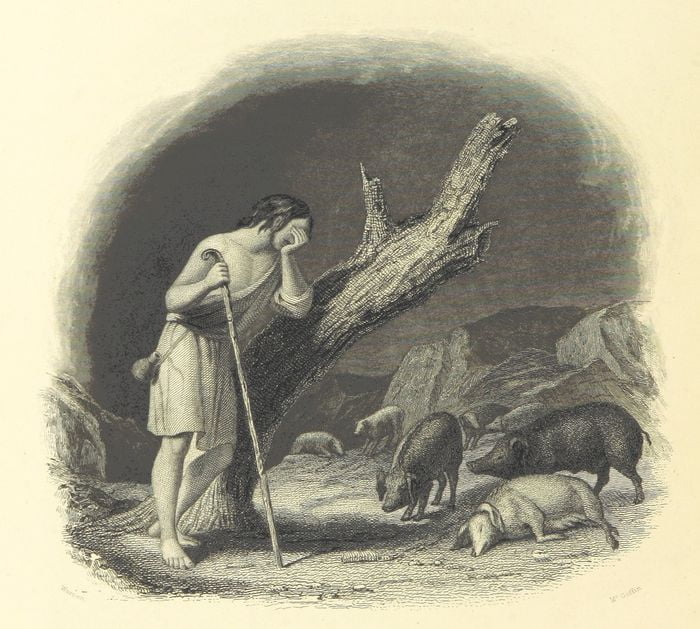
And he said, A certain man had two sons: and the younger of them said to his father, Father, give me the portion of goods that falleth to me. And he divided unto them his living. And not many days after the younger son gathered all together, and took his journey into a far country, and there wasted his substance with riotous living. And when he had spent all, there arose a mighty famine in that land; and he began to be in want. And he went and joined himself to a citizen of that country; and he sent him into his fields to feed swine. And he would fain have filled his belly with the husks that the swine did eat: and no man gave unto him. And when he came to himself, he said, How many hired servants of my father`s have bread enough and to spare, and I perish with hunger!

I will arise and go to my father, and will say unto him, Father, I have sinned against heaven, and before thee, and am no more worthy to be called thy son: make me as one of thy hired servants. And he arose, and came to his father. But when he was yet a great way off, his father saw him, and had compassion, and ran, and fell on his neck, and kissed him. And the son said unto him, Father, I have sinned against heaven, and in thy sight, and am no more worthy to be called thy son. But the father said to his servants, Bring forth the best robe, and put it on him; and put a ring on his hand, and shoes on his feet: and bring hither the fatted calf, and kill it; and let us eat, and be merry: For this my son was dead, and is alive again; he was lost, and is found. Arid they began to be merry.

The story above has been copied from ensaristanbul.com. You can read the rest of the story on link The Prodigal Son.

Read More about The Tall Woman part 4

The Jewish Mother 1

0

Biblical Literature

It is not surprising that the stories scattered so profusely through the Bible, the Apocrypha, and the Talmud, should be mostly moral tales. They were told in order to illustrate a theological or ethical contention or law, to glorify the race or nation to which the teller belonged, to attract and hold the interest of the listener. All of them were related by Jews, and all, even the parables of Jesus, bear the imprint of the Oriental imagination. The stories of Ruth and Susanna, from the Old Testament and the Apocrypha, are the earliest examples in this little group of Biblical tales. Ruth is the type of story that could easily be expanded into a novel, while Susanna conforms more exactly to the modern conception of what a short story ought to be. These two have been chosen from a great storehouse of prose narrative, which was designed in the first place to appeal to simple-minded shepherds and tradespeople.

In the New Testament we find among many other beautiful stories the parables. These are in reality fables, told by Jesus for exactly the same reason that the fables of Tisop or of Phsedrus were told, to drive home a moral lesson. If Jesus spoke his parables exactly as they are written, he must be accounted one of the world`s greatest artists. The Prodigal Son is a perfect model of the short story. The other tale included here, The Raising of Lazarus, though somewhat longer and more diffuse, is no less perfect.

The Talmud, which is the orthodox Jewish commentary on the Old Testament, bristles with short moral tales. To develop the art of the Jewish short story would necessitate tracing it from the earliest chapters of the Old Testament, through The Talmud, with all its accumulation of commentary upon commentary, through a long period of oral tradition up to modern times. There are still sporadic writers in the Hebrew language, though for the most part the modern Jewish writers (when they have not, like Israel Zangwill, written in the language of the country of their adoption) have employed the modern Yiddish dialect.

The whole text can be seen on link The Jewish Mother.

Read More about Melnik – beauty, emotions, antiquity

The Haunted House 2

0

Intermingle

On being thus left to himself, he marked the spot with some grass and leaves which he plucked. Next day he applied to the magistrates, and urged them to have the spot in question dug up. There were found there some bones attached to and intermingled with fetters; the body to which they had belonged, rotted away by time and the soil, had abandoned them thus naked and corroded to the chains. They were collected and interred at the public expense, and the house was ever alterwards free from the spirit, which had obtained due sepulture. I believe on the strength of those who affirm it. What follows I am myself in a position to affirm to others. I have a ireedman, who is not without some knowledge of letters.

A younger brother of his was sleeping with him in the same bed. The latter dreamed he saw some one sitting on the couch, who approached f Pair of scissors to his head, and even cut the hair from the crown of it. When day dawned he was found to be cropped round the crown, and his locks were discovered lying about. A very short time afterwards a fresh occurrence of the same kind confirmed the truth of the former one. A lad of mine was sleeping, in company with several others, in the pages apartment. There came through the windows (so he tells the story) two figures in white tunics, who cut his hair as he lay, and departed the way they came. In his case, too, daylight exhibited him shorn, and his locks scattered around. Nothing remarkable followed except, perhaps, this, that I was not brought under accusation, as should have been, if Domitian (in whose reign these events happened).

For ln his desk was found an information against me which had been presented by Cams; from which circumstance it may be conjectured inasmuch as it is the custom of accused persons to let their hair grow—that the cutting off of my slaves` hair was a sign of the danger which threatened me being averted.

I beg, then, that you will apply your great learning to this subject.

The matter is one which deserves long and deep consideration on your part; nor am I, for my part, undeserving of having the fruits of your wisdom imparted to me. You many even argue on both sides (as vour way is), provided you argue more forcibly on one side than the other so as not to dismiss me in suspense and anxiety, when the very cause of my consulting you has been to have my doubts ended.

Follow the rest of the story on link The Haunted House.

Read More about Pomorie Tours

The Dove and the Crow 2

0

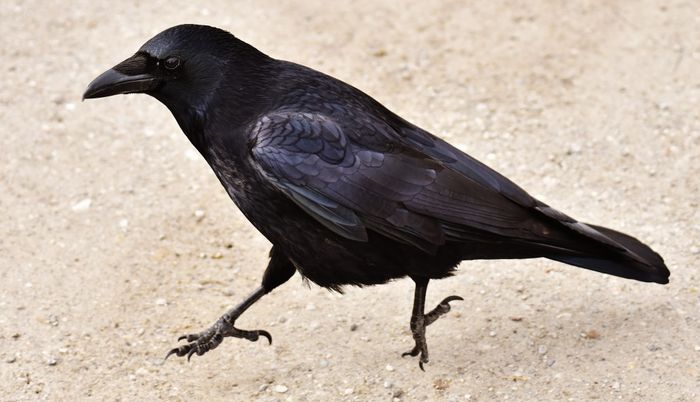
But the crow insisted. Matters of personal interest and friendship, he said, are decided by our inclination. We do not consider distance or the difference of condition. So the rat yielded and they swore a close friendship. One day when they were out together they happened to meet a deer; they stopped him and asked his name and where he was going. The deer said he was called Chitranga, told them his story, and asked if he might join them. They readily consented, and so the three struck up a lasting friendship.

One day while they were out together and were very thirsty, in their search for water they found a well into which a tortoise had fallen. As soon as she saw the three friends she begged them to take her out of her prison and to put her somewhere where she could live in comfort. Pitying her plight, they rescued her and took her to a spring of clear water; and she, mindful of this service, also became their friend.

For a long time the four lived happily together, but one day when the deer had gone away to graze he fell into the snare of a hunter. But when the rat saw that his friend the deer was so long in returning, he guessed that he had met with an accident. So he called the crow and told him what he feared and advised him to fly up and try to discover their friend. This the crow did, and after looking about for some time, at last saw poor Chitranga in the snare struggling hard to get out, but in vain.

The crow at once told Hiranya Varma what had happened to their friend, and he, calling his fellow-rats, sallied out to help him. They soon set him free. Chitranga went home with his friends and the acci-dent was soon forgotten. But later on, when the four friends were rest-ing quietly in the shade of a tree, they were suddenly disturbed by the unexpected sight of a crowd of hunters. This alarmed them.

The crow and the deer could easily avoid pursuit, but not so the rat, and least of all the tortoise. The other two would not leave them to the mercy of the hunters, who were coming on quickly, and so the deer undertook to attract attention to himself in order to save the life of his friends. He pretended to be lame. The hunters, seeing him limp and apparently hardly able to hold himself up, all ran to capture the easy prey. But the deer led them a long dance, sometimes quickening his pace, sometimes slowing down, until at last, having made them follow for a long time, he fairly used his four legs and was soon out of sight. Meanwhile the tortoise and the rat had found a place of safetyout of reach of the hunters.

Once more the four friends were united and lived quietly together; these dangers had taught them the value of true unity and of, sincere friendship, and by experience they learned how the weak need to support one another.

This story has been taken from tourhints.info; Read the rest of the story on link The Dove and the Crow.

Read More about Memoirs or Chronicle of the Fourth Crusade part 6

The Ass in the Lion`s Skin 2

0

Nothing whatsoever is known of the author or authors of the particular collection from which this story is taken. It is reprinted from Buddhist Birth Stories [Nidana-Katha], by T. W. Rhys Davids, London,
1880, by permission of the publishers, Kegan Paul, Trench, Trubner and Co.

The Ass in the Lion`s Skin

Once upon a time, while Brahmadatta was reigning in Benares, the future Buddha was born one of a peasant family; and when he grew up, he gained his living by tilling the ground.

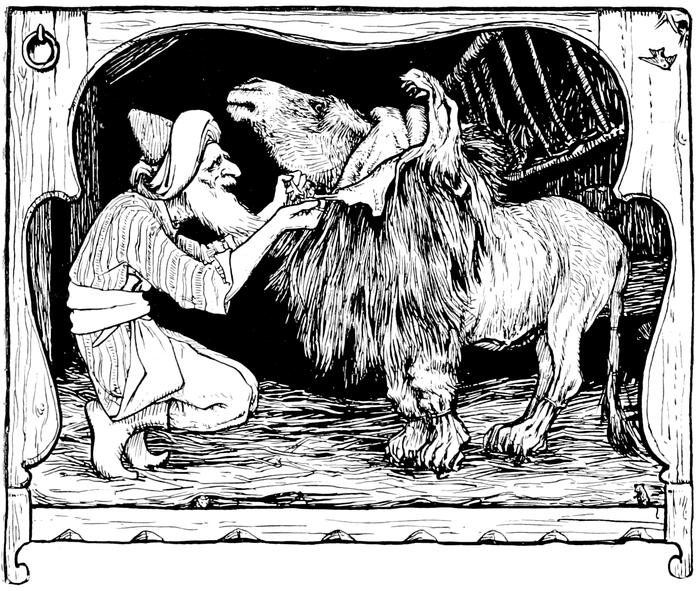
At that time a hawker used to go from place to place, trafficking in goods carried by an ass. Now at each place he came to, when he took the pack down from the ass`s back he used to clothe him in a lion`s skin, and turn him loose in the rice and barley-fields, and when the watchmen in the fields saw the ass, they dared not go near him, taking him for a lion. So one day the hawker stopped in a village; and while he was getting his own breakfast cooked, he dressed the ass in a lion`s skin and turned him loose in a barley-field. The watchmen in the field dared not go up to him; but going home, they published the news. Then all the villagers came out with weapons in their hands; and blowing chanks, and beating drums, they went near the field and shouted. Terrified with the fear of death, the ass uttered a cry— the cry of an ass!

And when he knew him then to be an ass, the future Buddha pronounced the first stanza

“This is not a lion`s roaring,

Nor a tiger`s, nor a panther`s;

Dressed in a lion`s skin,

`Tis a wretched ass that roars!”

But when the villagers knew the creature to be an ass, they beat him till his bones broke; and, carrying off the lion`s skin, went away. Then the hawker came, and seeing the ass fallen into so bad a plight, pronounced the second stanza:

“Long might the ass,

Clad in a lion`s skin,

Have fed on barley green,

But he brayed,

And that moment he came to ruin.”

And even while he was yet speaking the ass died on the spot!

The whole text can be seen on link The Ass in the Lion`s Skin.

Read More about The Miracle of the Jew part 3