Home Blog Page 23

The Old Bell-Ringer part 4

0

And there was his rich enemy, kneeling and praying to be forgiven for the many tears he had caused orphans to shed. He crossed himself ardently and struck his forehead against the ground.

Mikheyich`s heart boiled within him, and the dusky faces of the ikons frowned down upon human sorrow and human wickedness.

All that was past, behind him. For him the whole world was now bounded by this bell-tower, where the wind moaned in the darkness and stirred the ropes. … “God be your judge!” muttered the old man, drooping his gray head, while tears rolled gently down his cheeks.

“Mikheyich, ay, Mikheyich! Have you fallen asleep up there?” shouted someone from below.

“What?” the old man answered, rising to his feet. “God! Have I really been sleeping? Such a thing never happened before!”

Ant hill

With quick, experienced hands he grasped the ropes. Below him, the easant mob moved about like an ant-hill; banners, sparkling with gilt rocade, fluttered in the air. … The procession made the circuit of the church, and soon the joyous call reached Mikheyich, “Christ is risen from the dead!”

The old man`s heart responded fervently to this call.

It seemed to him that the tapers were burning more brightly, and the crowd was more agitated; the banners seemed to be animated, and the wakened wind gathered the billows of sound on its wings, floated them up and blended then with the loud festal pealing of the bells.

Never before had old Mikheyich rung like this!

It seemed as if the old man`s heart had passed into the lifeless brass, and the tones of the bells sang and laughed and wept, and, welding in a sublime stream of harmony, rose high and higher into a heaven resplendent with myriad stars, and, trembling, flowed down to earth.

A powerful bass bell proclaimed, “Christ is risen!” And two tenors, trembling with the alternate beats of their iron tongues, repeated joyfully, “Christ is risen!”

And two small sopranos, seemingly hastening so as not to be left behind, crowded in among the more powerful voices and, like little children, sang hurriedly, cheerfully, “Christ is risen!”

The old belfry seemed to tremble and shake, and the wind, flapping its wings in the old bell-ringer`s face, repeated, “Christ is risen!”

The old heart forgot its life, full of cares and grief. The old bellringer forgot that his life was confined to the narrow limits of the dreary bcl fry, that he was alone in the world, like an old storm-broken stump.

He heard those singing and weeping sounds that rose to heaven and fell again to the sorrowing earth, and it seemed to him that he was surrounded by his sons and grandsons, that he heard their joyful voices; the voices of young and old blend into a chorus and sing to him of happiness and joy which he had never tasted in his life. … He pulled the ropes, while tears rolled down his cheeks, and his heart beat violently with the illusion of happiness.

Below, people listened and said to each other that never before had old Mikheyich rung so well.

Suddenly the large bell uttered an uncertain sound, and grew dumb. The smaller ones rang out an unfinished tone, and then stopped, as if abashed, to listen to the lugubrious echo of the prolonged and palpitating note gradually dying away upon the air. … The old bell ringer, utterly exhausted, fell back on the bench, and the last two tears trickled slowly down his pallid cheeks.

“Hi, there! Send up a substitute; the old bell-ringer has rung his final stroke.”

Read More about Memoirs or Chronicle of the Fourth Crusade part 70
The Old Bell-Ringer part 3

0

But the hour had come. Mikheyich looked once more at the stars, took off his cap, made the sign of the cross, and grasped the bell-ropes. In a moment, the night air echoed with the resounding stroke. Another, a third, a fourth… one after the other, filling the quiescent, holy eve, there poured forth powerful, drawn-out, singing sounds.

The bell stopped. The church service had begun. Mikheyich had formerly been in the habit of going down to stand in the corner by the door in order to pray and hear the singing. This time he remained in the belfry. It was too much to walk the stairs, and, moreover, he felt rather tired. He sat down on the bench and, as he listened to the melting sounds of brass, fell to musing. About what? He would have been unable to say. … The tower was dimly lit by the feeble light of his lantern. The still vibrating bells were invisible in the darkness; from time to time a faint murmur of singing in the church below reached him, and the night wind stirred the ropes attached to the iron tongues of the bells.

Confuse fancy

The old man let his head droop upon his breast, while his mind was confused with fancies. “Now they are singing a hymn,” he thought, and imagined himself in church, where he heard the children`s voices in the choir, and saw Father Naum, long since dead, leading the congregation in prayer; hundreds of peasants` heads rose and fell, like ripened stalks of grain before the wind. … The peasants made the sign of the cross. …

All of these are familiar, although they are all dead. … There he beheld his father`s severe face; there was his brother fervently praying. And he also stood there, abloom with health and strength, filled with unconscious hope of happiness…. And where was that happiness?… For a moment, the old man`s thoughts flared up, illuminating various episodes in his past life.

He saw hard work, sorrow, care… where was this happiness? A hard lot will trace furrows even in a young face, will bend a powerful back and teach him to sigh as it had taught his older brother.

There on the left, among the village women, with her head humbly bowed, stood his sweetheart. A good woman, may she inherit the kingdom of Heaven! How much she had suffered, poor woman. … Constant poverty and work, and the inevitable sorrows of a woman`s life will wither her beauty; her eyes will lose their luster, and instead of the customary serenity, dull fear of unexpected calamities will settle perpetually on her face. … Well, then, where was her happiness? …One son was left to them, their one hope and joy; but he was too weak to withstand temptation.

Read More about Memoirs or Chronicle of the Fourth Crusade part 3

The Old Bell-Ringer part 2

0

Where would he be a year hence? Would he again climb to this height, beneath the brass bell to awaken the slumbering night with its metallic peal, or would he be lying in a dark comer of the graveyard, under a cross? God knows!… He was prepared; in the meantime God granted him the happiness of greeting the holiday once more.

“Glory be to God!” His lips whispered the customary formula as his eyes looked up to the heaven bright with a million twinkling stars and made the sign of the cross.

“Mikheyich, ay, Mikheyich!” called out to him the tremulous voice of an old man. The aged sexton gazed up at the belfry, shading his unsteady, tear-dimmed eyes with his hand, trying to see Mikheyich.

“What do you want? Here I am,” replied the bell-ringer, looking down from the belfry. “Can`t you see me?”

“No, I can`t. It must be time to ring. What do you say?”

Both looked at the stars. Myriads of God`s lights twinkled on high. The fiery Wagoner was above them. Mikheyich meditated.

“No, not yet a while. … I know when. …”

Need a watch

Indeed he knew. He did not need a watch. God`s stars would tell him when. … Heaven and earth, the white cloud gently floating in the sky, the dark forest with its indistinct murmur and the rippling of the stream enveloped by the darkness all that was familiar to him, part of him. Not in vain had he spent his life here.

The distant past arose before him. He recalled how for the first time-he had mounted to this belfry with his father. Lord! how long ago that was, and yet how recent it seemed!… He saw himself a blond lad; his eyes sparkled; the wind not the wind that raises the dust in the streets, but a strange one, that flaps its noiseless wings, tousled his hair…. Way down below, tiny beings walked about, and the village huts looked small; the forest had receded, and the oval clearing on which the village stood seemed enormous, so endless…

“And there it is, all of it!” smiled the gray-haired old man, gazing at the little clearing. … That was the way of life. As a young man one can not see the end of it. And now, there it was, as if in the palm of on`s hand, from the beginning to the grave over there which he had fancied for himself in the comer of the cemetery. … Well, glory be to God! it was time to rest. The burden of life he had borne honor- ably, and the damp earth seemed like his mother. … Soon, very noon!…

Read More about Lludd and Llevelys part 4

The Old Bell-Ringer part 1

0

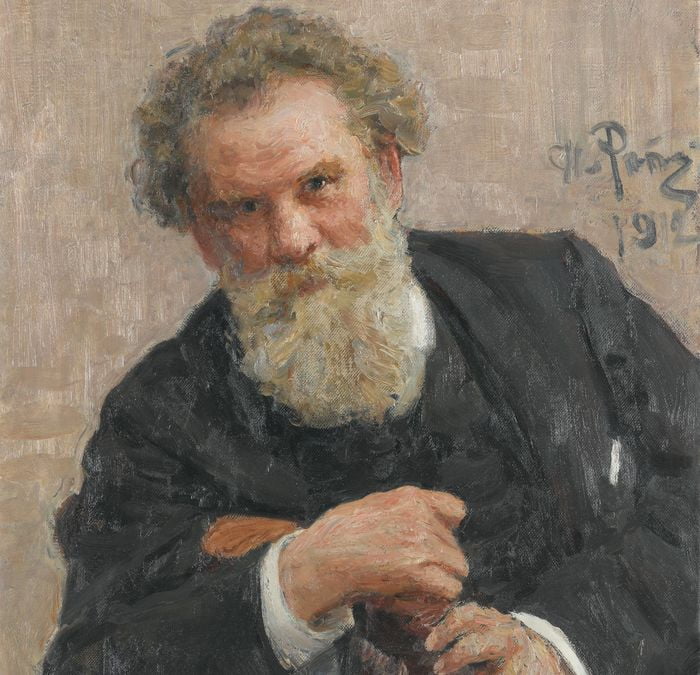
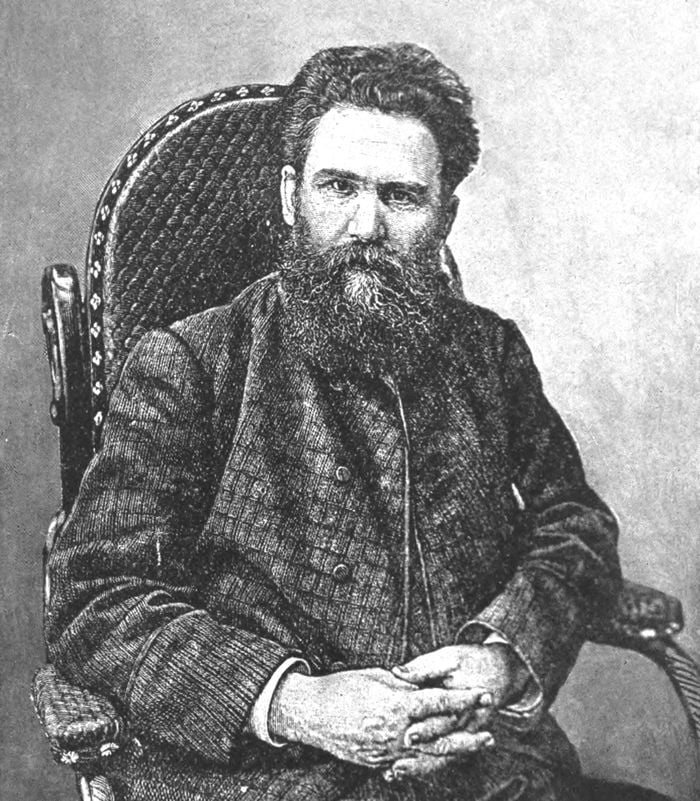
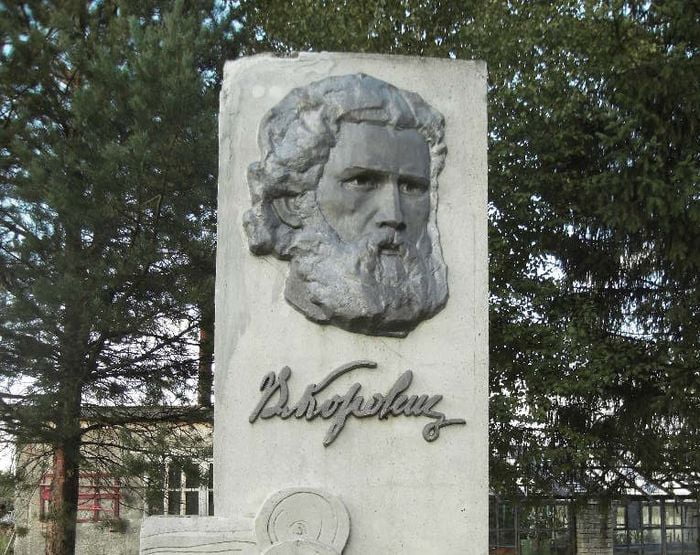
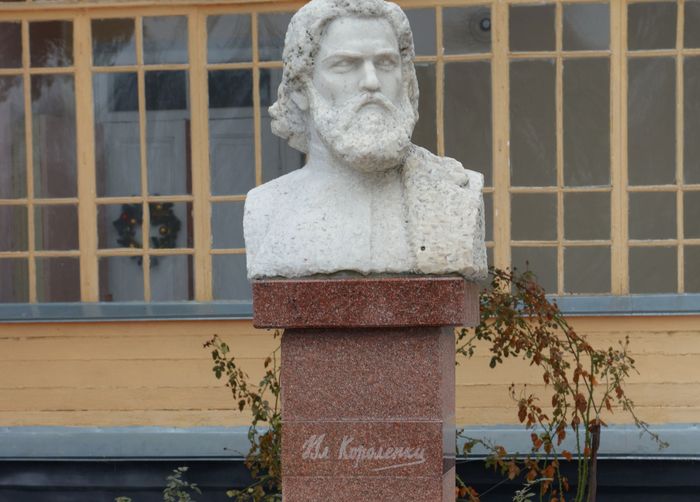
Vladimir Korolenko (1853-1921)

Korolenko spent a great part of his life in exile. Much of his writing is based on incidents gathered in Siberia. It is surprising that his exiledid not embitter him. His stories, which are half romances, are sympathetically and simply told.The Old Bell-Ringer is one of his most beautiful tales.The present version is by Maxim Lieber.

The Old Bell-Ringer

It was growing dark.The tiny village, nestling by the distant stream, in a pine forest, was merged in that twilight peculiar to starry spring nights, when the fog, rising from the earth, deepens the shadows of the woods and fills the open spaces with a silvery blue mist. … Everything was still, pensive and sad. The village quietly slumbered.The dark outlines of the wretched cabins were barely visible; here and there lights glimmered; now and then you could hear a gate creak; or a dog would suddenly bark and then stop. Occasionally, out of the dark, murmuring forest emerged the figure of a pedestrian, or that of a horseman; or a cart would jolt by. These were the inhabitants of lone forest hamlets going to their church for the great spring holiday.The church stood on a gentle hill in the center of the village. The ancient belfry, tall and murky, was lost in the blue sky.The creaking of the staircase could be heard as the old bell-ringer Mikheyich mounted to the belfry, and his little lantern, suspended in mid-air, looked like a star in space.It was difficult for the old man to climb the staircase. His leg served him badly, and his eyes saw but dimly. … An old man like him should have been at rest by now, but God spared him from death. He had buried his sons and his grandsons; he had accompanied old men and young men to their resting place, but he still lived on. `Twas hard. Many the times he had greeted the spring holiday, and he could not remember how often he had waited in that very belfry the appointed hour. And now God had again willed that…The old man went to the opening in the tower and leaned on the banister. In the darkness below, around the church, he made out the village cemetery in which the old crosses with their outstretched arms seemed to protect the ill-kept graves. Over these bowed here and there a few leafless birch trees. The aromatic odor of young buds, wafted to Mikheyich from below, brought with it a feeling of the melancholy of eternal sleep.

Read More about Supply and Demand part 7

Phrygian valley cradle

0

Cradle of Culture: Phrygian valley

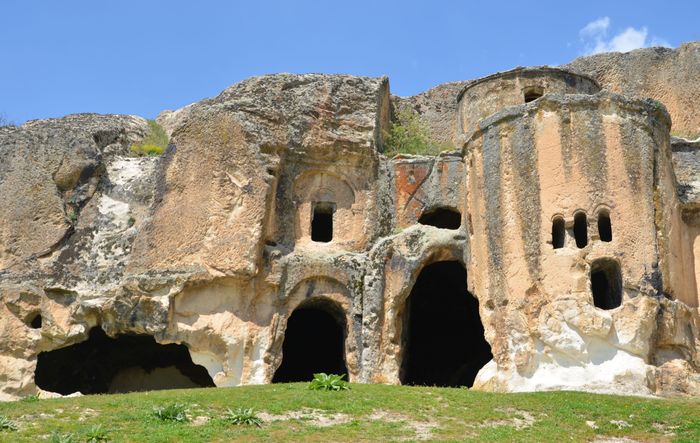
On one side monumental tumuli, giant rock-carved reliefs, altars and cave dwellings, on the other fairy chimney formations like works of art and the thermal springs that have warmed the lofty steppes of the Anatolian plateau for centuries. While wandering in the valleys and highlands, you grasp more easily the place in human history of the Phrygian civilization and its rich cultural heritage.

The region that includes the provinces of Afyonkarahisar, Kutahya and Eskisehir, where the monuments of the Phrygian civilization are located, is known today as the Valley of the Phrygians. Three cities still preserve their historic links with this magnificent geography, which illumines the present with the light of the past. Countless local riches, such as Afyonkarahisar`s marbles, Kutahya tiles and Eskisehir`s alabaster, are the touchstones of this cultural journey.

Every day at dawn, first the castle perched on the colossal rock mass that rises behind it is illuminated at Afyonkarahisar. Then, spreading across the lower reaches of Afyonkarahisar Castle, the light reaches the historic texture of a house close to four hundred years old.

This region, where you can find vestiges of traditional Afyonkarahisar life, is among the finest living examples of Anatolian civil architecture. Strolling about here, a person is astonished to encounter old-fashioned grocery stores with their characteristic smell that brings back childhood memories.

Afyonkarahisar

Situated at the point of intersection of the inter-city highways to Istanbul, Ankara and Izmir, Afyonkarahisar is always alive and humming. The hotels and large shopping centers that have spread to the province keep the region ever vibrant.

Like a virtual continuation today of the ancient trade routes, this junction and its dynamics are a major contributor to the city`s economy.

Another city center exhibiting vestiges of history in the Phrygian Valley is Kutahya, which stands out for its mosques, baths, mausoleums, fountains, old mansions and museums. It is easier to get a handle on the city`s magnificent past on Germiyan Sokak, which is lined with old houses.

You can also find rich examples of the local handicrafts all over the city. The pottery that dates all the way back to the Phrygians and the tiles that symbolize the city are among the branches of industry that contribute to the local economy.

To understand the place where one lives and to appreciate its beauty, sometimes one has to look at it from another angle. To be able to say that one has seen Eskisehir, which could be considered the modem face of the Valley of the Phrygians, one should pay a brief visit to Kent (City) Park, which has been dubbed the `lungs `of Eskisehir, or survey the city`s skyline from Selale (Waterfall) Park.

Watered by the Porsuk River, this progressive city is Anatolia`s rising star with its green cover, its transportation net that functions like clockwork, and its refreshing parks. Eskisehir also boasts a young and highly educated population, in which the university and its extensive campuses undoubtedly play the largest part. You`ll encounter young lovers on almost every street here, or students on an outing by gondola on the Porsuk, livening up the atmosphere with their cries of glee.

Read More about Filmekimi

Alanya Turquoise Blue

0

Alanya Turquoise Blue meets autumns entirely different experience…

The average air temperature never falls below 19°C here in this town blessed with sunshine 300 days of the year. What`s more, getting there is as easy as pie thanks to Alanya Gazipasa Airport. Just 135 kilometers east of Antalya, Alanya has a history going back thousands of years. Home to the tribes dispersed to Anatolia after the Trojan War, the city was known as Kolodorus, meaning beautiful mountain, in the Byzantine period.

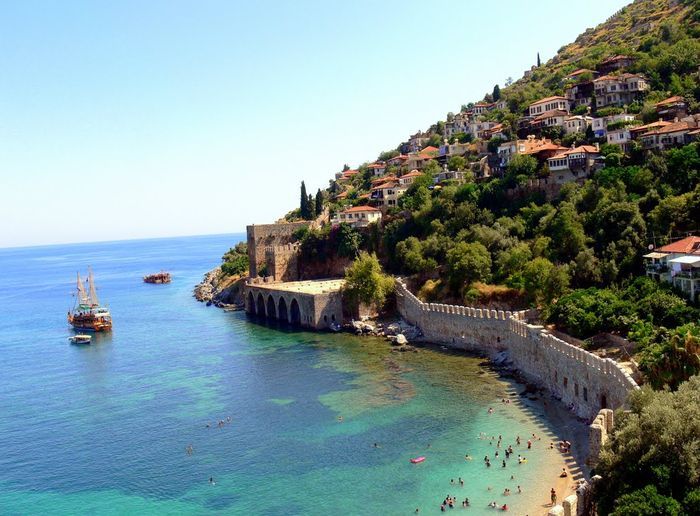
Enjoying a golden age in the medieval period, it grew and developed inside one of Anatolia`s most impressive castles. A small fishing community surrounded by orange orchards until just half a century ago, Alanya today looks like a city where life revolves around tourism. We begin our tour from the Old Town. Rising on a steep headland behind the harbor, Alanya Castle at 250 meters above the sea recalls an eagl`s eyrie. Exactly 33 meters tall, the Red Tower is one of the most imposing aspects of this castle encircled by 6.5 kilometers of defense walls.

At the left end of the tower the stone structure reminiscent of a five-arch bridge is the sole surviving Seljuk dockyard. The interior of the castle is a virtual open air museum with dozens of Roman, Seljuk and Ottoman artifacts standing side by side. The New City meanwhile spreads out in both directions from the headland with the castle. The 70-kilometer coast, stretching from Ulas Burnu right up to the city limits of Gazipasa, forms the main axis of the settlement. But this town is determined not to expand further but to undergo a facelift.

Golden sand beaches

And the buildings freshly repainted in pastel colors have given it a new lease on life. The green areas that cover more than half the township are also carefully tended. But perhaps Alanya`s real attraction is its golden sand beaches. Among the best not just in Turkey but in the entire Eastern Mediterranean, they are designated by the blue flag, international symbol of order and cleanliness.

Rumor has it that the Egyptian Queen Cleopatra even came to these beaches on her private ship. Not only that but the sea at Alanya is also safe for children and non-swimmers since it only begins to deepen some 50 meters from shore. A boat cruise in Alanya`s waters will acquaint you with the mysterious world of sea caves that once provided refuge to pirates. Going inside these caves, which radiate powerful light even in the daytime thanks to the phosphorescent stones on their floors, is an inimitable experience. Who knows? You might even get a chance to spot a Mediterranean seal as you cruise these cave-dotted shores.

The Dim Valley is another of the area`s stunning beauty spots. This earthly paradise covered with forest and rare plant species lies just 15 kilometers from the town. And the stream flowing through it is one of Turkey`s most popular rafting routes. Rustic restaurants take refuge in the shade of century-old plane trees along its banks. Going up into the highlands is another must if you come to Alanya.

Rising to 3,000 meters, the Western Taurus is the home of nomadic communities with traditions going back thousands of years. These Yoruks go up into the mountains every spring to find fresh pasture for their flocks, living in goat hair tents until winter comes and weaving colorful kilims from the wool of their sheep. A large number of travel agents now organize jeep safaris into the highlands, where the air is refreshingly cool on even the hottest summer days.

Read More about Bulgaria private tours Kazanlak

Filmekimi

0

A special development for its 10th year

In its 10th year, Filmekimi goes beyond Istanbul`s city limits and takes the best and most current examples of cinema to five more cities in Turkey. The special selection comprised of films in the Filmekimi and Istanbul Film Festival programme will be shown in Izmir on 13-16 October, in Bursa and Konya on 20-23 October and in Trabzon and Diyarbakir on 27-30 October.

This year`s prominent films include the Dardenne Brothers` `The Kid with a Bik` which shared the Cannes Grand Jury Award with Nuri Bilge Ceylan`s `Once Upon A Time in Anatolia`, the latest film by Lars von Trier `Melancholia`, the latest film by Jaffar Panahi `This Is Not a Film` and `This Must Be the Plac` directed by Paolo Sorrentino and starring Sean Penn.

The festival will also showcase the latest works of prominent directors

Pirates on the Caribbean:

On Stranger tides

We had captain Jack Sparrow once again. He runs from adventure to adventure in the fourth of Pirates of the Caribbean series that swept the world, `Pirates of the Caribbean:

On Stranger Tides`, instead of the stars of the first films in the series, Orlando Bloom and Keira Knightly, it is Peneiope Cruz who accompanies Johnny Depp.

Bestsellers in movies

1- Pirates of the Caribbean on Stranger Tides 

Rob Marshall

2- Rio / Carlos Saldanha

3- incir Regeli Aytag /Murat Agirlar

4- Cars /John Lasseter

5- Limitless / Neil Burger

6- Biutiful Alejandro/Gonzalez Inarritu

7- Kaybedenler Kulubu / Tolga Ornek

8- Ask Tesadufleri Sever/Omer Faruk Sorak

9- Pirates of the Caribbean Quadrilogy

10- The King`s Speech 

Tom Hooper

Gulben Ergen

Gulben Ergen, who had been away from the music scene for a long time, has reunited with her fans. Two years on from her 2009 album. `Uzun Yol sarkilarf, Gulben Ergen has instantly achieved success with `Hayat Bi Gun…` The album contains 10 songs. Yart Qiptak composed by Serdar Ortac has not taken long to be the most frequently requested and played song on the radio.

Read More about Muslim calendar

Sea Captain

0

I would have liked to be a Captain of the Sea

Drawing viewers` attention with the role of Peyker in the TV series Ask-i Memnu, Nur Fettahoglu has made it to the top as the character of Mahidevran in Muhtesem Yuzyil (The Magnificent Century). `If I were Mahidevran, I would think of more clever solutions, but this is desperation, you never know` says the beautiful actress, stating that if she had lived during that period, she would have wanted to be Barbarossa Hayreddin Pasha.

`The leading figures of that period went through great pain`

Starting her acting career with `Benden Baba Olmaz` and then following with `Gonul Salincagi`, Nur Fettahoglu really made her acting breakthrough as `Peyker` in Ask-i Memnu. The role of Mahidevran in `Muhtesem Yuzyil` has carved her a position at the top. The beautiful actress, appearing as Mahidevran, one of the strong women of the Harem during the reign of Kanuni, says if she had lived during that period, she would have wanted to be a seafarer like Barbarossa Hayreddin Pasha. We spoke to her about her acting career and other elements of her life.

Would you give us some hints about the new season of `Muhtesem Yuzyil`?

What can I say? Another thrilling season, a turbulent harem and again, a tearful Mahidevran.

Mahidevran

What would Nur do if she were Mahidevran?

Nur would be sad, too. Nur would struggle, too, at least for her child. She would come up with cleverer solutions and be more coolheaded in her plans, sure, but this is desperation, you never know what she would do. After all, Hurrem`s fame has gone beyond the locked box that is the Harem; it has been told from ear to ear for 450-500 years and survived to this day.

It has so much power. So may god protect Nur from Hurrems.

Whose life would you have wanted to live if you had lived during that period?

We see that the leading figures of the period went through great pain that is hard to handle. Some are lovers who cannot unite, while some grieve for their deceased children and others cannot save their beloved siblings. Death or love has visited all of them, leaving behind troubles without remedies. Other people have been forgotten anyway; I do not know if I would want to be someone who was forgotten. The best would be to become the master of the seas; it is already in my blood. I would have wanted to be Barbarossa.

`I have a great deal to learn in the field of acting`

Underneath that cold character on the screen, there is a vibrant woman. When will we see you on the screen with a role, or a TV show that reflects this side of you?

I would also love to show my warm, lively side with such a character, of course, but there are no such plans just now.

You have studied fashion design, worked as a banker, presented the news on TV, and are now acting. How else will you surprise the world?

I let the winds hurl me around and in the end, I found myself where I want to be. I also enjoy designing and want to make use of this; the boss of a successful design company. Why not?

Read More about The smell of the history

Art Lover

0

An art lover also loves good food

– For breakfast Laduree (21 rue Bonaparte), Eggs Co (11 rue Bernard Palissy) and Gerard Mulot (76 rue de Seine). Accompanied with whipped cream and apricot marmalade. You must have French toast (a sweet version of Turkish eggy bread).

– For lunch, you could act like a Parisian, splash out and watch a rare steak served with string beans arrive at your table or you could drool over the mussels at the neighboring table and say, `I wish I`d ordered that,` at Les Editeurs (4 Carrefour de I`Odeon).

Visit St. Germain, the heart of Paris` alternative art scene

We recommend Laduree for breakfast, Les Editeurs for lunch and La Palette for dinner opening out to the world from Paris. For a dynamic time.

Now that you are in Paris, you must have French food for dinner. Friday, Relais de I`Entrecote (15 rue Marbeuf); Saturday, Le Petit St-Benoit (4 rue Saint-Benoit), Sunday, La Palette (290 rue Charenton).

Phoenix: The first band to spring to mind when it comes to Art Rock or Indie. This French band made their name known across the ocean remembered Olivier Assayas. At Au Saint Benoit Restaurant (26 rue Saint-Benoit) I melted along with the vanilla ice cream of the most delicious profiterole I have ever eaten. I woke up in a tiny attic flat and watched Quatre-Vents street from above; got a taste of the Paris rain and wind and experienced its white nights.

Parisian habits

On Sundays, the Parisian scoffs a roast beef sandwich with beer after waiting in line at Schwartz on the side of rue Rosier, also known as the Jewish street;

Although touristy, once in a while the Parisian orders meal of meat, gherkins and fried potatoes at Chartier (7 rue de Faubourg Montmartre) and isn`t taken by surprise if he hears applause after a glass is broken;

The Parisian buys fresh flowers, cheese, prawns and green vegetables from Bastille on Sundays and hosts friends at home later in the evening;

The Parisian knows that hot baguettes come out at 7am and 7pm and never skips coffee at breakfast;

The Parisian collects cheap art books at Mona Lisait (9 rue St. Martin);

If the weather is pleasant, the Parisian buys sparkling wine and goes for a picnic at Buttes Chaumont or the canal side of Saint Martin;

The Parisian listens to opera at Gamier, live music at Point Ephemere (200 quai de Valmy) and rock at Truskel (12 rue Claude Tilliers).

Tips from Deniz, local Bars: One of the best known in Paris` 20th arrondissement, Aux Folies (8-rue de Belleville). It is packed at every hour of the day (7am- 3am) but there is always somewhere to sit on the terrace. It is a Paris mystery; you cannot understand why it is so popular until you become a regular. Food: My newest discovery is Le Verre Diable (10 rue Saint Marc ET 38), the young gem of the Passage des Panoramas, filled with boring historical restaurants.

Shopping: Boutique Matieres a Reflexion (19 rue de Poitou), which functions as a friends` collective, is a rare gem in the Marais. This tiny, independent shop resembling a living workshop specializes in vintage leather and bags. Do not forget to drop in.

Read More about Agehi (985/1577)

Mardin Stonemasonry

0

Mardin Stone Masonry Master-Trainer

I was born in 1965 in Mardin. I have been a stonemason for 25 years. I practice this art with love and enjoy sharing with people. I feel happy when working. In 1985, when I wasn`t working yet, I met with Master Yusuf. He is the best stonemason of Mardin. He took me into his business. At first it was quite challenging, I wanted to quit but I endured and accomplished because patience rewards us with success. I have done this for 25 years and I am glad I did not quit.

Hardest part

Drawing is the hardest part…

A couple of good eyes and concentration are crucial in stonemasonry.

Determination and patience are the basics. Becoming a stonemason would be very difficult without these qualities. Presently, there are three or four stonemasons.

Like I said, patience and devotion will bring success and this art will spring to its feet again. I kind of talk with the stone as I do my job. This way always makes me happy. The hardest part of this art is absolutely the drawing process. One needs to be attentive when drawing.

I first learned about the `One Master Thousand Masters` project with the help of Mardin Culture and Tourism Director Davut Beliktay and Mardin Culture and Art Association President Nurettin Cakmak. I wanted to teach the trainees what I have learned from my master and during my 25 years of experience. Participation had been satisfying, classes had been enjoyable.

Trainees were willing and they worked with determination… All my students took this business serious. I think some of them will carry it on. I thank Anadolu Sigorta once again for creating such an opportunity. Within the context of the project, I gave trainings intensely for three months. I wish that my students would open workshops and continue practicing this art by enhancing it. I believe they will succeed.

Read More about Veliko Tarnovo – legends and reality