Home Blog Page 23

History of Yalvac

0

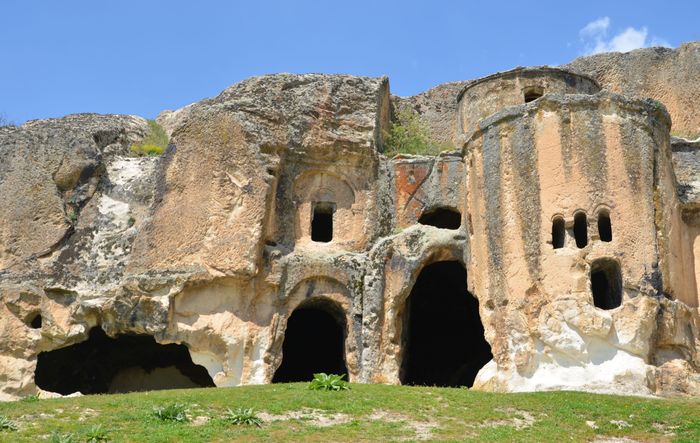
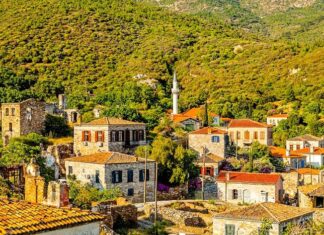
Anatolia was successively a home for the civilizations of the Hittites, the Assyrians, the Lydians and the Persians. After Alexander the Great`s invasion, it became the home of still more civilizations, the results of which we can see today. Reflecting these developments, Yalvac`s inexhaustible love of culture and civilization continued as if it had set sail on the sea of hope.

Despite his youthfulness, Alexander`s military genius enabled him to conquer Anatolia in the course of his campaigns. Inspired by the teachings of famous philosophers and by the aspirations of his father, Phillip II of Macedon, he brought peace and security to the peninsula. After Alexander`s untimely death, the city of Antiocheia in Pisidia was founded on the southern side of the Sultan mountains by one of his generals, Seleukos, or possibly his son, Antiochos. In 39-36 BC, the city was ruled by Amyntas and it later was incorporated into the territories of the Galatians.

Colonia Caesarea Antiocheia

During Roman times, the city became a substantial Roman colony known as “Colonia Caesarea Antiocheia”. This was one of the first Roman colonies to be established in Pisidia and also the biggest. The 5th and 7th Roman Legions were established at this colony. As a result, Antiocheia was to become one of the most Romanized of all Anatolian cities; so much that Emperor Augustus chose the city to be the second capital in Asia Minor (as the Romans referred to Anatolia) and had 3,000 of his veterans relocated here from Rome.

The city was even divided up into seven districts, which were named after those in Rome. Henceforth, Rome and Antiocheia were considered as sister cities. Moreover, one copy of the

Latin text, which is known as “Res Gestae Divi Augusti” (The Deeds of the Deified Augustus) and which relates to the deeds he accomplished, has been found here.

By the end of the 3rd century, Antiocheia had become the biggest city of Pisidia. The coins unearthed during excavations, reveal the wealth and power of the city in this period.

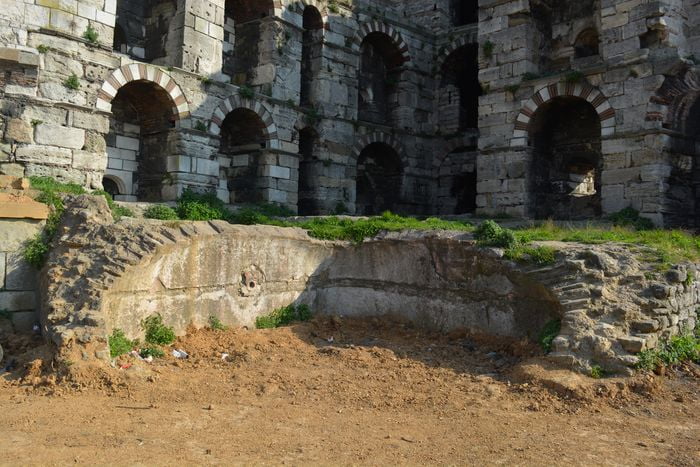
With the beginning of the Arab invasions in 713, however, the city`s fortunes went into decline. On the other hand, the architectural works indicate that the city recovered and retained its importance in the Middle Ages.

After the middle of the 13th century, people began abandoning the city, moving to other parts of the region or leaving it entirely. Antiocheia, the home of human settlement and culture for thousands of years, sank into the obscurity of depopulation and neglect.

Read More about Sea Captain

Dubrovnik and Austria

0

It`s not just Dubrovnik that`s worth a look. The surrounding area also has a great deal to offer.

The new Radisson Blu Hotel Sun Gardens makes a great base camp for anyone wishing to explore the resort of Dubrovnik ten kilometres away -and connected to the hotel by a shuttle boat – the beautiful southern stretch of the Dalmatian coast which surrounds it, and the offshore islands, which are always worth a look. If quiet, undiscovered destinations are your thing, the region has an embarrassment of riches.

Dubrovnik itself is not known as `Little Venic` for nothing; like its celebrated Italian counterpart across the Adriatic, the Croatian port is impressive and rich in histoiy, with ancient palaces, narrow alleyways and beautiful views over the sea. Any visit should also include a trip to the Elaphiti Islands, where the island of Lopud in particular is a must-see. And whenyou return from your day out island-hopping, the Radisson Resort offers the perfect place to relax and reflect, with restaurants offering Dalmatian and international cuisine, the largest spa on the Dalmatian coast, bars and cafes. And of course, those unspoilt Adriatic beaches.

What`s Up In Austria

The latest from culture and the arts.

200 Years Of The Joanneum

This year sees the Universatmuseum Joanneum in Graz celebrate the 200th anniversary of first opening its doors to the public. In addition to an extensive programme including numerous exhibitions, two new locations are being presented in the shape of the Museum im Palais and the loanneumsviertef: the relocation of the Kulturhistorische Sammlungat Palais Herberstein (opening 11 May) combines the latest exhibition presentation techniques with the appearance of the building, itself a protected historic monument. With its high-quality exhibits, the Museum im Palais is already becoming a true “Styrian treasure tro ve ”, The Joanneumsviertel opens its doors at the end of November.

Master Of The Oceans

 “Your art is great and powerful, because a genius inspires you ” William Turner once said of Ivan Aivazovsky. The Bank Austria Kunst- forum is currently presenting the work of the extraordinary artist for the first time ever outside Russia and Ukraine. Dedicated to the spirit of the romantic throughout, the paintings show not just shipwrecks, battles and naval manoeuvres, but also serene coastal scenes. His tour de force, “The Ninth Wave”, combines a catastrophic scenario with a glimmer of hope. The exhibition, “A ivazovsky – Painter of the Sea”, can be seen until 10 July.

Read More about Grand Balkan Tour